



Basic Life Support (BLS) and cardiopulmonary resuscitation (CPR) training prepare healthcare providers to respond when a person stops breathing, loses consciousness, or experiences another life-threatening emergency. BLS CPR certification shows that you have completed structured instruction and practiced the steps used during an emergency response.
Healthcare providers may be expected to recognize a serious situation, call for additional help, begin CPR, and coordinate with other trained responders. Practicing these actions in advance can help you follow an organized process when every moment requires careful attention.
At Above The Rest Home Care, our healthcare training courses help you build practical skills for emergency response, caregiving, medication-related responsibilities, and continued professional development. The right training depends on the work you plan to do and the requirements of your employer, school, or professional program.
BLS CPR is especially relevant when you are preparing for a healthcare or caregiving role where emergency-response skills may be required. It can also help current professionals review procedures and maintain training connected to their responsibilities.
What Is BLS CPR Certification, and Why Does It Matter?
BLS CPR certification confirms that you have completed training in emergency-response skills commonly used in healthcare settings. The course prepares you to recognize a life-threatening situation and respond according to the procedures taught during training.
CPR focuses on supporting breathing and circulation during certain emergencies. BLS training places those skills within a wider response that may include assessing the situation, getting help, using emergency equipment, and working with other responders.
This preparation matters because healthcare providers often work with people whose condition can change without warning. Training gives you an established sequence to follow instead of asking you to make every decision for the first time during an emergency.
BLS CPR training can help you practice how to:
- Recognize when immediate assistance may be needed
- Begin a response within the scope of your training
- Communicate clearly with coworkers and emergency personnel
- Coordinate with other trained responders
- Follow emergency procedures in an organized order
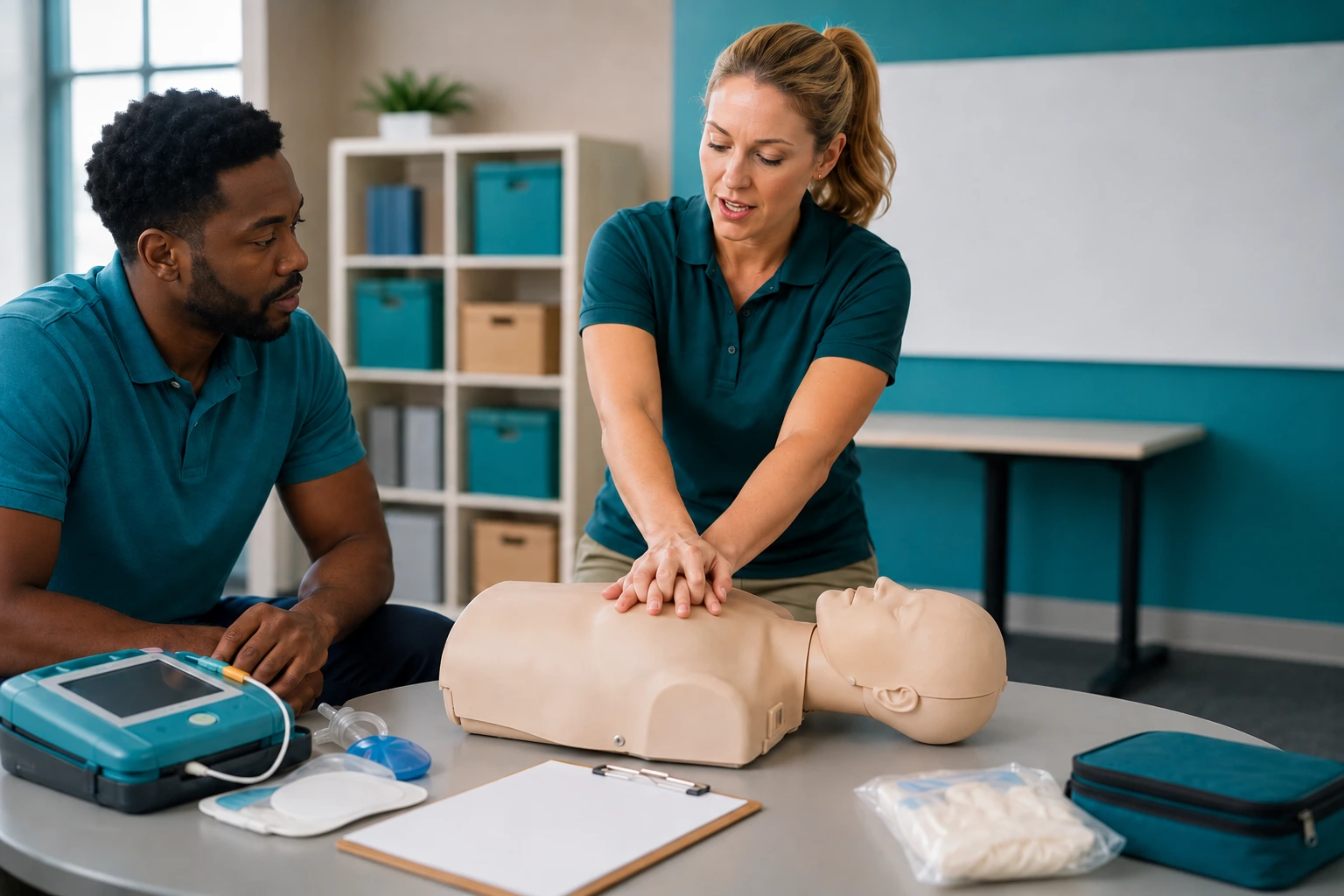
Hands-on practice also gives an instructor the opportunity to correct your technique and answer questions. Reading about CPR can introduce the steps, but guided training allows you to practice how those steps work together.
Who Should Consider BLS CPR Training?
You should consider BLS CPR training if you are preparing for a healthcare or caregiving role where emergency-response skills may be expected. You may also need it if an employer, school, or professional program requires documented training.
BLS CPR may be relevant for:
- People entering healthcare or caregiving work
- Home care and assisted living staff
- Nursing students and other healthcare students
- Current professionals completing required training or renewal
- Supervisors arranging staff development
The correct course depends on your role. Someone preparing for a healthcare-provider position may need different training than someone working in a child care setting, office, school, or general workplace.
Before registering, confirm whether your employer, school, or professional program requires BLS CPR or another type of emergency-response training. This can help you avoid choosing a course that does not match your intended responsibilities.
How Is BLS CPR Different From General CPR Training?
BLS CPR is generally intended for healthcare providers and people preparing for healthcare-related responsibilities. General CPR training may be designed for a wider audience, including caregivers, teachers, child care providers, workplace staff, and community members.
Both types of training focus on emergency response, but the course structure, level of detail, and expected responsibilities may differ.
Understanding the importance of CPR training can help you decide whether a general CPR course or healthcare-focused BLS training better fits your responsibilities.
A general CPR course may be appropriate when you want broader emergency-response preparation for a workplace, caregiving role, or community setting. BLS CPR may be more suitable when your role involves healthcare-provider responsibilities or coordinated response with other trained professionals.
The best choice is the course that matches your role and meets the requirements you have been given.
How Can BLS CPR Support Your Professional Preparation?
BLS CPR training can support your professional preparation by giving you structured practice in skills that may be relevant to your work. It can also help you become more familiar with the expectations connected to emergency response.
For someone entering healthcare, the course can provide an early look at how quickly situations may change and why an organized response matters. For a current professional, training can offer a practical way to review procedures and strengthen familiarity with the steps.
BLS CPR certification may also be one of several requirements connected to your position. Completing it can help you move forward with a school, employer, or professional program when that organization requires the training.
BLS CPR certification can support your preparation, but it does not replace the education, credentials, or role-specific instruction required for a healthcare position. Your employer, school, or licensing authority should confirm the exact training you need.
If you are responsible for staff development, BLS CPR training may also help create a more consistent understanding of emergency-response procedures across your team. Each employee should still complete the course that fits their responsibilities.
BLS CPR May Be One Part of Your Healthcare Training
Emergency-response preparation may be only one part of the work you are preparing to do. Your next training choice should reflect the responsibilities you expect to have in your role.
If medication support may become part of your responsibilities, learning about medication administration training can help you understand which type of preparation may fit your role.
Medication-related responsibilities vary by position and care setting. One course may not apply to every job, so confirm the training required for the specific duties you expect to perform.
Above The Rest Home Care can explain the courses currently available, current scheduling, and the steps required to register. You should also confirm any role-specific requirement with your employer, school, or licensing authority before choosing a course.
When you are ready to build practical caregiving skills, you can book your healthcare training and take the next step toward your professional goals.
Take the Next Step That Fits Your Role
BLS CPR certification can be an important part of preparing for healthcare and caregiving responsibilities. The right course should match the work you plan to do, the setting where you will work, and any requirements you have been given.
BLS CPR may fit healthcare-provider emergency-response responsibilities, while general CPR may be more appropriate for other workplaces and caregiving environments. Medication administration training may be relevant when your role includes medication-related duties.
Above The Rest Home Care can help you review the available training options so you can choose your next step with clearer expectations.
Frequently Asked Questions
Is BLS the Same as CPR?
No. Basic Life Support is broader emergency-response training commonly associated with healthcare-provider responsibilities. Cardiopulmonary resuscitation is one of the central skills included in that training.
Who Needs BLS CPR Certification?
BLS CPR may be required for healthcare professionals, students, caregivers, or other workers whose responsibilities include emergency-response preparation. Requirements vary, so confirm the exact course with your employer, school, licensing authority, or professional program before enrolling.
How Do I Know Which Healthcare Training Course to Take?
Start with the duties you expect to perform. Choose BLS CPR when healthcare-provider emergency response is part of the role or when an organization specifically requires it. Consider general CPR for broader workplace preparation and medication administration training when medication support is connected to your responsibilities.
When you need help choosing a course that fits your role or professional direction, you can get in touch with us to discuss the available options and next steps.



Leave a Reply